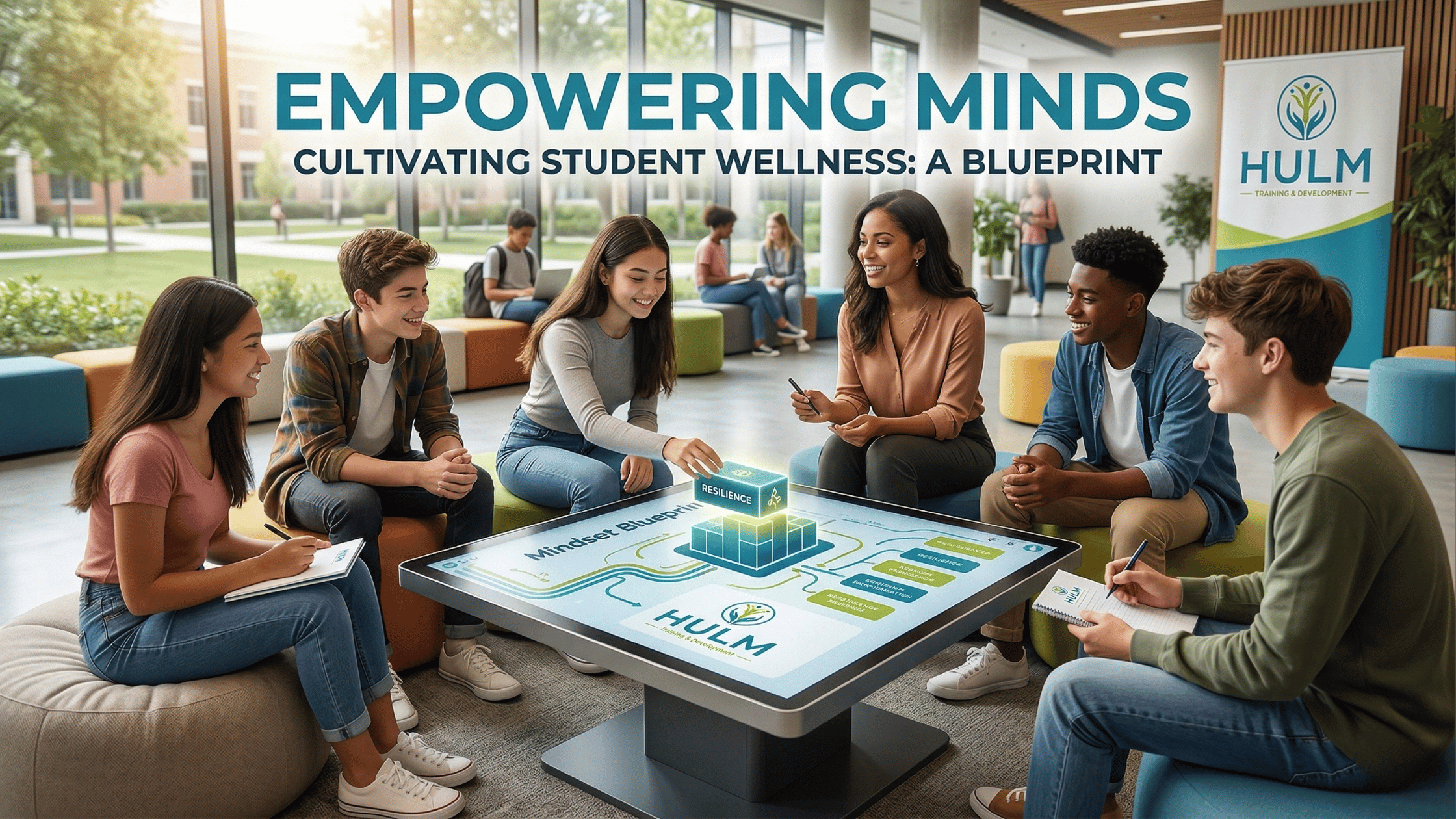
How Schools Can Introduce Motivational and Mental Wellness Sessions for Students
There's a particular kind of stress that students carry that most adults have forgotten about. It's not just exams. It's the constant comparison, the pressure to figure out who you are while simultaneously performing well enough to keep everyone around you satisfied. Most kids don't talk about it. They just carry it.
And most schools, genuinely well-meaning, have no real structure to address it.
That gap is where student mental wellness programs in schools become less of a luxury and more of something that probably should have existed years ago.
Why This Conversation Is Happening Now
One could easily say that it is a post-pandemic thing. Some of it is. But frankly speaking, the stress on students in Indian cities, especially in Bangalore, was already mounting way before that. The rivalry in admissions, parental pressure, social networks, and the lack of distinction between grades and personal value. Such a mixture was bound to come back to haunt somewhere.
What's changed is that schools are starting to acknowledge it openly. Teachers are noticing things they couldn't name before. Parents are asking questions. And students, slowly, are starting to say out loud what they've been feeling privately for a long time.
Where Most Schools Get It Wrong
The instinct is usually to bring in a one-time session. A guest speaker, an assembly talk, maybe a worksheet on stress management. Everyone feels like something was done. Then Monday arrives, and nothing is different.
That approach isn't useless. It just doesn't stick. Students need repeated, structured exposure to wellness concepts for any of it to actually land. A single session on managing anxiety does roughly what a single session at the gym does. You feel something in the moment. A week later, nothing has changed.
What works is building it into the school calendar the same way sports or art is built in. Not as an event. As a practice.
What These Sessions Actually Look Like
Good student wellness sessions don't feel like therapy, and they shouldn't. Most students will shut down the moment it feels clinical or forced.
The practical is the place to begin. What do you do when your brain is not shutting down the night before an exam? So how do you cope when a friendship gets on the wrong track, and you have to sit next to that individual every day? These are the questions that students already have in their hands. Classes that begin there quickly draw attention.
Once students are engaged, the facilitator can slowly bring in the bigger ideas. Things like recognizing what triggers stress, or why certain conflicts keep repeating. The concepts aren't complicated. Most students already live them. Putting language to it is usually enough.
The Teacher Factor
Here's something schools underestimate: teachers are often the first people students go to when something is wrong. Not counselors, not parents. Teachers.
Sometimes it's a student who's gone quieter than usual. Or one who's suddenly picking fights they wouldn't have before. Teachers notice. Most of them care quite a lot, actually. The gap isn't in their willingness. It's in knowing what to do with what they're seeing.
That's exactly what targeted teacher training tries to address. It doesn't turn teachers into therapists. It gives them enough grounding to respond without either dismissing what they're hearing or inadvertently making it worse. That's a more realistic and probably more impactful intervention than most schools consider.
Making It Work Practically
Starting doesn't have to mean starting big.
Pick one grade. Run a few sessions. See what lands, what doesn't, and what students actually respond to. Then take that learning somewhere.
Bring in external facilitators for the first few cycles, people who do this work specifically with students and know how to read a room full of teenagers who didn't ask to be there. Internal staff can take over more gradually once the format is established.
Forced attendance is killing the whole affair. Students who feel they are being controlled will turn off, and others will even fight back. The content is as important as the packaging.
And measure something. Not just attendance. Ask the students, at the start and finish of a series of sessions, how they rate their abilities to cope with stress, talk with someone when they feel distressed, or cope with a conflict with a peer. The data plays a significant role in institutional compliance with the program.
maintaining institutional adherence to the program.
What Changes When Schools Get This Right
Nobody rings a bell when it works.
What schools report, over time, is that students start talking more. To teachers, to each other, and occasionally to counselors they previously had no relationship with. Classrooms feel slightly less tense. Students who were struggling quietly start asking for help slightly sooner.
On paper, none of that looks like much. But ask the student who finally understood why they shut down before every exam, or the teacher who said exactly the right thing without really knowing why it worked. It meant something to them.
HULM Training and Development has been working with schools, colleges and student groups in Bangalore since 2017. Their student programs are built around what is actually happening in the Indian classrooms instead of imported models that are not suitable.
They not only work with students but also train teachers, as they know that both parties in that relationship require support. Schools interested in having an actual discussion about where to begin can contact HULM and work it out there.
When schools commit to this work properly, not as a one-time event but as something that runs through the year, things shift gradually. Students start handling pressure differently. Teachers feel less alone in the difficult moments. It builds quietly, but it builds. HULM Training and Development works with schools across Bangalore to build programs that actually fit the environment in which students are learning.
FAQS
1. How often should schools run mental wellness sessions for students?
Once a term isn't enough, students need consistent exposure for anything to actually stick. Ideally, sessions should run monthly at a minimum, with shorter check-ins built into the school calendar between them. The schools that see real results are the ones that treat this as an ongoing practice rather than an occasional program.
2. What age group benefits most from student wellness programs
Every age group benefits differently. Younger students respond well to sessions built around emotional vocabulary and conflict resolution. Older students, particularly those in high-pressure exam years, need more practical tools around stress and decision-making. The most effective programs are designed with specific age groups in mind rather than a one-size-fits-all approach across the school.
3. Should schools hire internal counselors or bring in external facilitators?
Both have a place, but they serve different functions. An internal counselor builds ongoing relationships with students over time. External facilitators bring structured programs and a level of objectivity that can actually make students more comfortable opening up. Starting with external support while building internal capacity gradually tends to work better than trying to do everything in-house from day one.
4. How do you get students to actually engage with wellness sessions
The framing matters more than most schools realize. Sessions that feel like another class, or worse, like a lecture about feelings, lose students immediately. Starting with real situations students are already navigating, exam pressure, friendship conflicts, social comparison, earns attention in a way that abstract wellness content simply doesn't. Students engage when they feel like the session is actually about their life.
5. How can schools measure whether these programs are actually working?
Attendance numbers tell you nothing useful. What matters is whether students report feeling more equipped to handle stress, more willing to ask for help, and more connected to at least one trusted adult in the school. Short feedback forms before and after a program cycle, combined with teacher observations over time, give a far clearer picture than any single metric alone.