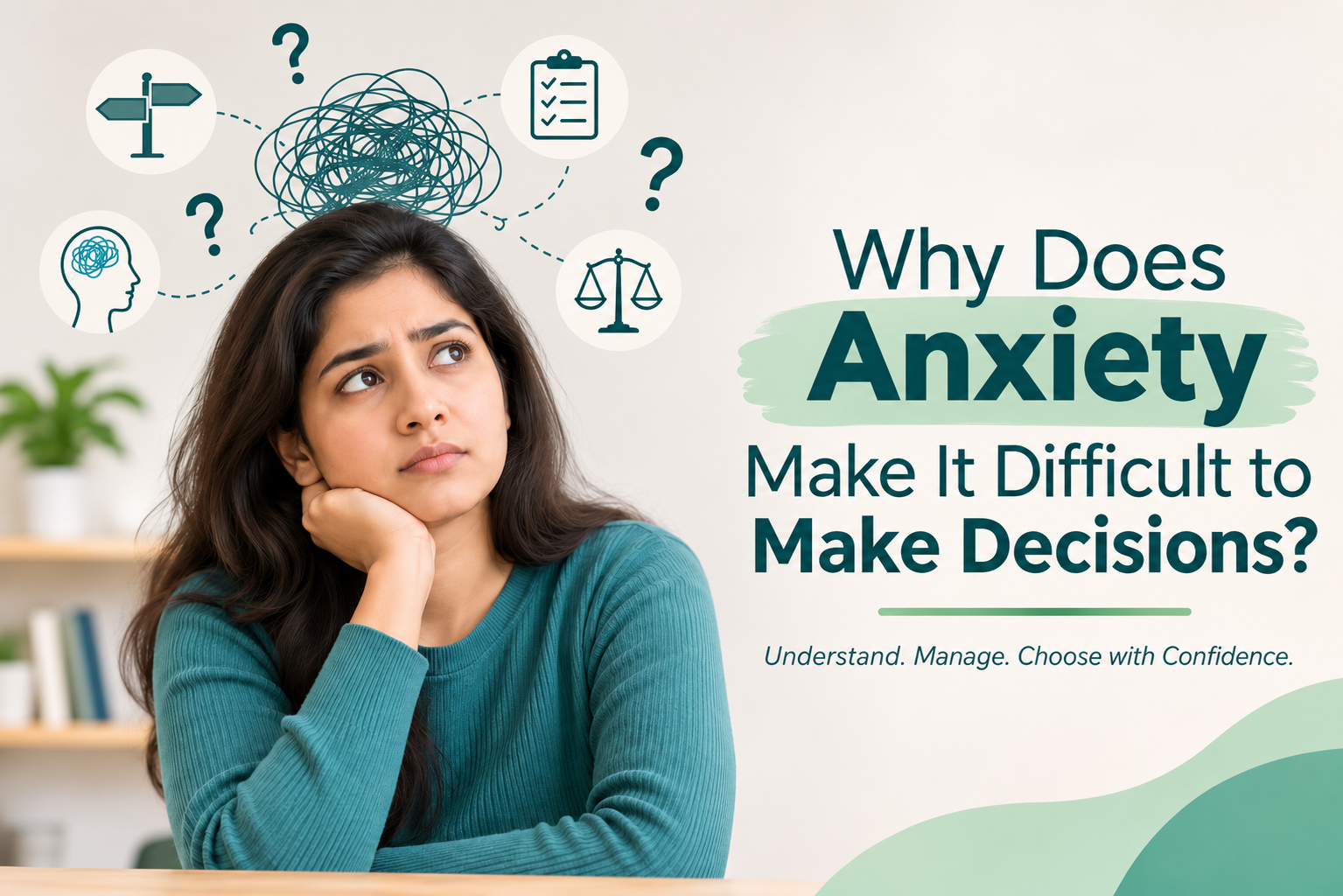
Why Does Anxiety Make It Difficult to Make Decisions?
Anxiety can make even simple decisions feel complicated. When someone constantly worries about possible outcomes, fears making mistakes, or struggles with uncertainty, choosing between options can become emotionally exhausting. This may lead to overthinking, repeated reassurance-seeking, delayed decisions, or avoiding choices altogether. Understanding why this happens and learning practical ways to manage these patterns can help individuals make decisions with greater confidence.
How Does Anxiety Affect Decision-Making?
Decision-making involves evaluating information, considering possible outcomes, and choosing an appropriate response. However, persistent worry can make this process difficult.
Someone experiencing anxiety may spend excessive time thinking about what could go wrong rather than considering what is realistically possible. Even everyday choices, such as responding to a message, selecting a career option, or making personal plans, may feel overwhelming.
This often happens because the mind becomes focused on avoiding mistakes instead of finding workable solutions.
Why Does Anxiety Make Small Decisions Feel Difficult?
Several psychological patterns can contribute to decision-making difficulties.
1. Fear of Making the Wrong Choice
A person may believe that one incorrect decision could lead to serious consequences. This fear of failure can create hesitation, even when the decision involves relatively minor risks.
2. Constant Overthinking
Repeatedly analysing the same situation can make it difficult to reach a conclusion. Individuals may compare every possible outcome, revisit previous choices, and question whether they have considered everything.
This pattern of overthinking can increase mental exhaustion without necessarily improving the final decision.
3. Difficulty Handling Uncertainty
Not every situation provides complete information or guarantees a particular outcome. However, uncertainty may feel particularly uncomfortable for someone who wants complete reassurance before making a choice.
4. Reduced Confidence
Repeated self-doubt can make individuals question their judgement. They may depend heavily on other people's opinions or repeatedly seek confirmation before taking action.
What Are the Signs That Anxiety Is Affecting Your Decisions?
You may notice the following behaviours:
- Spending too much time making ordinary choices.
- Frequently changing decisions after making them.
- Asking several people for reassurance.
- Avoiding important conversations or responsibilities.
- Imagining negative outcomes before considering positive possibilities.
- Feeling mentally exhausted after making simple choices.
These experiences may be associated with decision fatigue, particularly when someone spends much of the day worrying about different situations.
5 Practical Ways to Make Decisions With Greater Confidence
1. Set a Time Limit
Give yourself a reasonable amount of time to make everyday decisions. Avoid repeatedly revisiting a choice once you have considered the important information.
2. Separate Facts From Assumptions
Write down what you know and what you are imagining might happen. This can help identify negative thought patterns and prevent unlikely outcomes from controlling your decisions.
3. Focus on What You Can Control
Instead of trying to predict every possible result, identify the practical steps available to you. Accepting that some uncertainty is unavoidable can make decision-making less overwhelming.
4. Practise Small Decisions Independently
Start with manageable choices without asking others for repeated reassurance. Gradually developing self-confidence can help you trust your judgement in more important situations.
5. Use Relaxation Techniques
Slow breathing, short walks, journaling, and mindfulness may help you feel calmer before making an important choice. These coping strategies can support better emotional awareness and reduce the pressure to make an immediate decision.
How to Break the Anxiety Cycle
The anxiety cycle can involve a triggering situation, worrying thoughts, physical tension, avoidance, and temporary relief. For example, someone afraid of making a mistake may postpone a decision. Although avoiding it may initially reduce discomfort, the uncertainty remains and the same worry can return.
Breaking this pattern involves recognising the trigger, questioning unrealistic fears, and gradually facing manageable situations instead of avoiding them.
Developing better emotional regulation can also help individuals respond thoughtfully rather than allowing immediate fear to determine their actions.
When Should You Consider Professional Support?
Occasional hesitation is normal. However, when worrying and indecision repeatedly interfere with work, relationships, personal responsibilities, or everyday activities, additional support may be beneficial.
People searching for a therapist near me may be looking for guidance when persistent worry, avoidance, or self-doubt becomes difficult to manage independently.
Professional support can help individuals understand their thought patterns, identify contributing factors, and practise healthier responses. Approaches such as cognitive behavioural therapy may help people recognise unhelpful thinking habits and gradually develop more balanced ways of approaching difficult situations.
How HULM Counselling Can Help
HULM Counselling provides counselling and psychotherapy support for individuals experiencing emotional and personal challenges. Those looking for a psychologist in Bangalore can explore professional support to better understand recurring concerns, improve coping skills, and develop healthier approaches to everyday situations.
The goal is to help individuals understand their experiences and work towards improved emotional well-being through appropriate guidance.
Frequently Asked Questions
1. What Are the Symptoms of Stage 4 Anxiety?
There is no universally recognised clinical classification called stage 4 anxiety. Anxiety severity is generally understood through the nature, frequency, intensity, and impact of symptoms.
Possible experiences include persistent worry, difficulty concentrating, restlessness, sleep disturbances, physical tension, rapid heartbeat, and avoidance of situations that cause distress. A qualified professional can assess the symptoms and recommend appropriate support.
2. How Can You Tell If Anxiety Is Getting Worse?
Anxiety may be worsening when worrying becomes more frequent or difficult to control, sleep is regularly disrupted, concentration declines, or everyday responsibilities become harder to manage. Increasing avoidance, irritability, and physical tension may also indicate that additional support is needed.
3. How Can I Break the Anxiety Cycle?
Start by identifying situations that trigger worry. Recognise unhelpful thoughts, practise slow breathing, focus on manageable actions, and gradually approach situations you have been avoiding. Consistent practice and professional guidance can help when the cycle becomes difficult to manage alone.
4. Do People With Anxiety Struggle to Make Decisions?
Yes. Anxiety can make decision-making difficult because individuals may overanalyse possibilities, fear negative outcomes, struggle with uncertainty, or repeatedly seek reassurance. Learning to recognise these patterns can help improve decision-making confidence.